Panitia Peduli & Prihatin

Tentang Kami

Panitia Peduli dan Prihatin merupakan satu badan yang ditubuhkan bagi menyalurkan maklumat-maklumat tentang isu polemik dunia. Rasulullah Sallahu Alaihi Wa Sallam bersabda "Tidak sempurna iman jika kau tidur dalam kekenyangan, sedang jiran tetanggamu menderita kerana kelaparan". Mari ambil cakna isu dunia.
Showing posts with label Eropah. Show all posts

22 November 2011

Kempen UNHATE di Itali


ITALIAN clothes company Benetton has been forced to pull a controversial photo montage showing the Pope kissing a leading imam from its new global ad campaign after a Vatican backlash.
The company, which is no stranger to controversy over its advertising campaigns, said it was "sorry that the use of the image had so hurt the sensibilities of the faithful''.

The statement, issued yesterday, came shortly after the Vatican expressed "the firmest protest for this absolutely unacceptable use of the image of the Holy Father''.

Benetton's poster showed Pope Benedict XVI kissing on the lips Egypt's Ahmed el Tayyeb, imam of the Al-Azhar Mosque in Cairo and a leading voice in Sunni Islam.

It launched a new global advertising campaign called UNHATE that contained a series of photo montages of political and religious leaders kissing.
The company defended the campaign, saying its purpose "was solely to battle the culture of hate in all its forms''.

There were other shock pictures showing US President Barack Obama kissing Chinese counterpart Hu Jintao in one picture and Venezuelan leader Hugo Chavez in another.

Benetton posters


French president Nicolas Sarkozy and German chancellor Angela Merkel also formed part of the advertising campaign called unhate. Picture: AFP
Source: AFP

One picture showed Israeli Prime Minister Benjamin Netanyahu smooching Palestinian leader Mahmud Abbas.

In another, French President Nicolas Sarkozy is depicted kissing German Chancellor Angela Merkel.

A picture of Silvio Berlusconi kissing Merkel was pulled at the last minute after the jovial billionaire submitted his resignation last week.

The Vatican strongly criticised the Benedict ad.

"We must express the firmest protest for this absolutely unacceptable use of the image of the Holy Father, manipulated and exploited in a publicity campaign with commercial ends,'' Vatican spokesman Federico Lombardi said in a statement.

"This shows a grave lack of respect for the pope, an offence to the feelings of believers, a clear demonstration of how publicity can violate the basic rules of respect for people by attracting attention with provocation,'' he said.

The Vatican was examining what steps to take "to guarantee a fair defence of respect for the image of the Holy Father'', he added.

The posters appeared in Benetton clothing stores across the globe as well as in newspapers, magazines and on Internet websites.

The passionate embrace between the pope and the imam was briefly shown on a banner held 
up near Rome's landmark Castel Sant'Angelo castle not far from the Vatican.


Benetton deputy chief Alessandro Benetton said earlier in a statement that the ads were "constructive provocation'' intended "to give widespread visibility to an ideal notion of tolerance''.

Benetton "chooses social issues and actively promotes humanitarian causes that could not otherwise have been communicated on a global scale'', he said.

But Luca Borgomeo, head of the Association of Italian Catholic Television Viewers, called for the ad to be removed.

"Is it possible Benetton could not come up with anything better?'' he said.

The company, which became famous in the 1990s with a series of shocking ads, said it was also setting up a foundation to promote international tolerance.

"The central theme is the kiss, the most universal symbol of love, between world political and religious leaders,'' the company said.

One of the iconic Benetton ads - photographed by Oliviero Toscani - was of a young nun in white kissing a priest dressed in a black cassock, and others addressed important social issues such as AIDS and homosexuality.

Relations between the pope and the Al-Azhar imam, one of the leading voices in Sunni Islam, have been very tense particularly after Benedict expressed his solidarity with the victims of an attack on a Coptic church in Alexandria.

The statement was interpreted by Tayyeb as interference and he did not send a delegation to an inter-religious meeting hosted by Benedict last month.

18 July 2011

Doktor anti-pengguguran dan masa depan

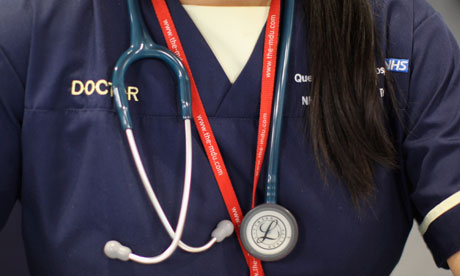
Satu survey telah dilaksanakan bagi memantau pandangan para doktor terhadap keupayaan untuk menidakkan perkhidmatan tertentu atas sebab moral, budaya dan latar belakang agama. Keputusan survey yang dilakukan menunjukkan 45.2% berpendapat doktor mempunyai hak untuk menidakkan merawat pesakit jika bertentangan dengan kepercayaan peribadi. Dalam 45.2% itu, catatan tertinggi adalah dalam kalangan pelajar perubatan. Catatan tertinggi dalam kalangan pelajar perubatan itu ialah PELAJAR PERUBATAN MUSLIM sebanyak 76.2%. Tetapi masyarakat seperti tidak puas hati terhadap perkara ini. Ikuti berita lengkap:


Doctors' anti-abortion views could impact on women's access to service

Concern about termination services is rising, with fewer doctors willing to perform the procedure, DoH says


A survey of medical students has found that almost half believe doctors should be allowed to refuse to perform any procedure to which they object. Photograph: Christopher Furlong/Getty Images
Pregnant women could find it harder in future to obtain an abortionbecause of the growing number of doctors who are opposed to carrying out terminations.
A survey of medical students has found that almost half believe doctors should be allowed to refuse to perform any procedure to which they object on moral, cultural or religious grounds, such as prescribing contraception or treating someone who is drunk or high on drugs.
Abortion provoked the strongest feelings among the 733 medical students surveyed, according to the study in the Journal of Medical Ethics. "The survey revealed that almost a third of students would not perform an abortion for a congenitally malformed foetus after 24 weeks, a quarter would not perform an abortion for failed contraception before 24 weeks and a fifth would not perform an abortion on a minor who was the victim of rape," said researcher Dr Sophie Strickland.
"In light of increasing demand for abortions, these results may have implications for women's access to abortion services in the future," she added.
Concern about termination services is rising, with fewer doctors willing to perform the procedure, according to the Department of Health. The Royal College of Obstetricians and Gynaecologists has voiced concern about the "slow but growing problem of trainees opting out of training in the termination of pregnancy and is therefore concerned about the abortion service of the future".
Ann Furedi, chief executive of the British Pregnancy Advisory Service, said: "Abortion is taught increasingly infrequently in medical school, and students may not be required to engage much with the reasons why a woman may find herself with an unwanted pregnancy and the distress this may cause. All of us involved in women's reproductive healthcare need to ensure that young doctors understand why women need abortions, and that this is a profession to be proud of."
Some 45.2% of those surveyed believed doctors should have the right to refuse to treat someone when doing so clashed with their personal beliefs, but 40.6% disagreed. "Once qualified as doctors, if all these respondents acted on their conscience and refused to perform certain procedures, it may become impossible for conscientious objectors to be accommodated in medicine," said Strickland.
Backing for a doctor's right to refuse to perform any procedure was highest among Muslim medical students, at 76.2%. Some 54.5% of Jewish students also thought doctors should have the right to refuse, as did 51.2% of Protestants and 46.3% of Catholics.
Guidance drawn up by the General Medical Council (GMC), which regulates doctors, advises doctors to refer a patient to a colleague if they object to a certain procedure or treatment.
"However, we also make clear that doctors have an overriding duty to provide care for patients who are in need of medical treatment, whatever the cause of that medical need. It is not acceptable to opt out of treating a particular patient or group of patients because of personal beliefs or views about them, for example if they misuse drugs or alcohol," said Dr Peter Rubin, the GMC's chair.
The British Medical Association said that while doctors and medical students can refuse to participate in treatments they are uncomfortable with, patients must not be harmed or affected by their decision. They must also give patients enough information so they can seek treatment elsewhere within the NHS, according to a spokesman for the doctors' union's medical ethics committee.
The Department of Health said: "Patients' clinical needs always come first, and practising doctors understand this. It is unlawful to discriminate on the grounds of religion or belief and the law does not entitle people to apply such beliefs in a way which impinges upon other people, even if they claim that their religion or belief requires them to act in this way.
"All patients have a right to a comprehensive and fair NHS. The NHS constitution, white paper and the Equality Act provide the legal framework and principles that underpin the way the NHS should provide its services and support its staff."
sumber : guardian.co.uk